INSIGHTS
Jeonju AI and Roblox Creator Training: Applications Open
Applications are open for a free AI and Roblox content creation program for young adults aged 18–39, organized by the Jeonju IT & CT Industry Promotion Agency.
Read article ↗A field note from a Roblox creation class at Gungdong Children’s Library, covering how public institutions can prepare and run Roblox Studio classes more smoothly.
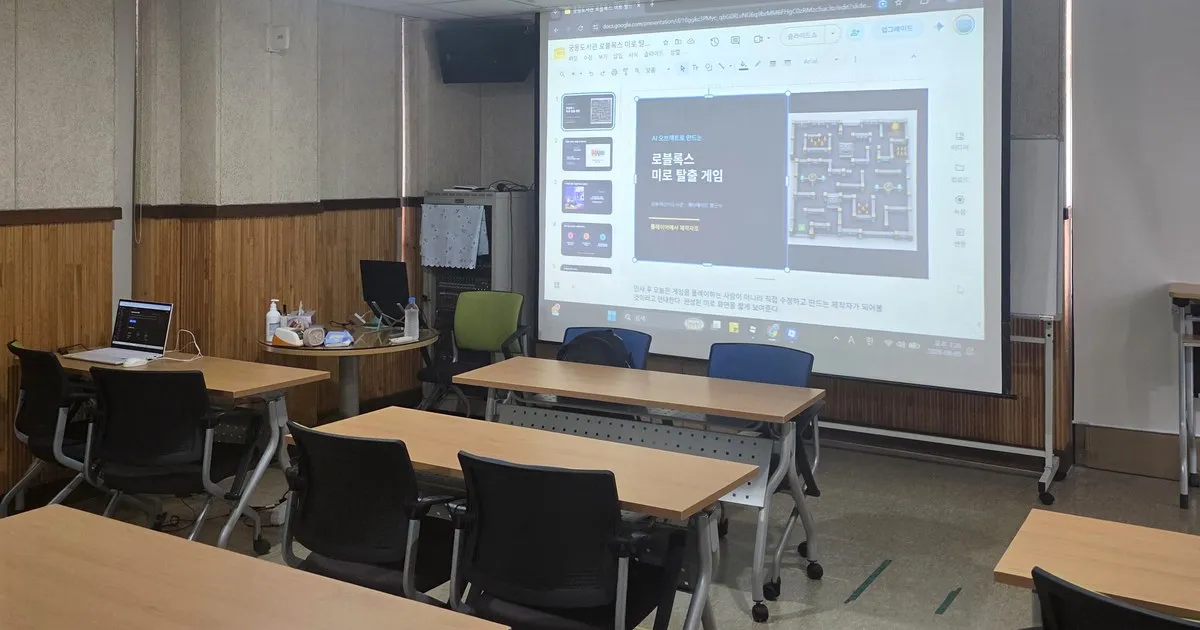
On August 5, 2026, METAMATE ran a Roblox creation class for elementary students at Gungdong Children’s Library in Guro-gu.
This article is a field note rather than an event announcement. It summarizes what public libraries, youth centers, and cultural institutions should prepare before running a Roblox Studio class.
Roblox education should not stop at “children like Roblox, so let’s use it for coding.” In practice, class quality depends on setup, login, screen sharing, student skill gaps, and how clearly the expected outcome is scoped.
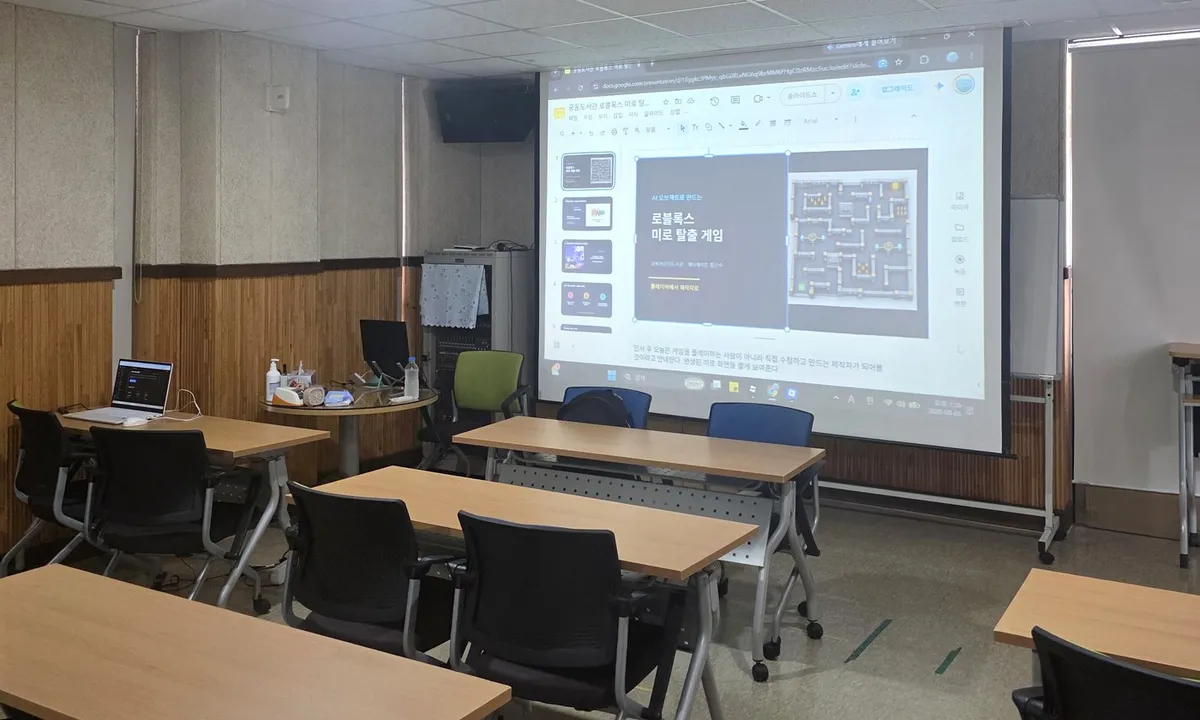
For public institution classes, the first thing to design is the entry flow.
Students should be able to sit down, open Roblox Studio, and follow the instructor quickly. If login, installation, network access, or screen sharing gets blocked, the usable class time drops fast.
Important checks include:
| Checkpoint | Why it matters |
|---|---|
| Roblox Studio installation | Avoid losing time during class |
| Student account readiness | Prevent login issues |
| Instructor screen sharing | Let students follow the same screen |
| Mouse availability | Studio control is easier with a mouse |
| Seat layout | Let instructors reach students quickly |
Library classes often involve students who are meeting the instructor for the first time. A stable starting setup has a direct impact on the class outcome.
For beginners, “complete a game” can be too large as a first class goal.
The first objective should be letting students select objects, move them, resize them, adjust properties, and test the result inside Roblox Studio.
In this class, the goal was not to build a large game from scratch. The goal was to let students experience the basic creation flow through a prepared structure.
This helps students understand Roblox as a creation tool, not only a game they play.
If beginners create everything from scratch, the difficulty rises quickly.
If students freely import any Toolbox model, the class can become harder to manage. Unverified models and scripts can create bugs, performance issues, or inconsistent results across students.
For public classes, a pre-vetted lesson kit is more stable.
A lesson kit does not limit creativity. It gives students a safe starting structure so they can edit, test, and understand how their changes affect the play experience.
In a maze-building class, students might:
This is enough to teach the basics of game structure without forcing students to write too much code at the beginning.
Libraries are well suited for Roblox creation classes.
They are less test-driven than schools and less performance-driven than private academies. Students can explore a new creation tool and share a small result in a low-pressure environment.
However, the operating scope should be clear.
| Operating area | Recommended direction |
|---|---|
| Class time | 2-hour modules work best |
| Audience | Upper elementary students are usually smoother |
| Class size | Small offline classes are more stable |
| Outcome | A playable small world, not a full game |
| Presentation | Short sharing for one-day classes, deeper presentation for multi-session programs |
For institutions trying Roblox for the first time, a 2-hour pilot class is often better than starting with a large multi-session program immediately.
When requesting a Roblox class, the following details help shape a realistic proposal:
These details help keep the class scope realistic.
If the goal is for students to fully complete and present a polished project, a multi-session program is usually more appropriate than a one-day class. A one-day class works better as an introductory creation experience.
Roblox classes for public institutions can go beyond a simple coding activity.
Libraries can use them as creative workshops. Youth centers can use them as pre-training for competitions. Cultural foundations can connect them to local themes, exhibitions, or creative programs.
METAMATE can support:
The Gungdong Library class confirmed one practical point.
Roblox is familiar to many students, but familiarity alone does not make a good class. The class needs a structure where students can touch, change, test, and understand the result within the available time.
For libraries and public institutions planning Roblox education, it is usually best to begin with a 2-hour pilot class, then expand into one-day workshops, multi-session projects, or competition preparation based on student response and equipment conditions.
Share the participants, group size, schedule and venue or computer setup. We can discuss a class plan for your institution.
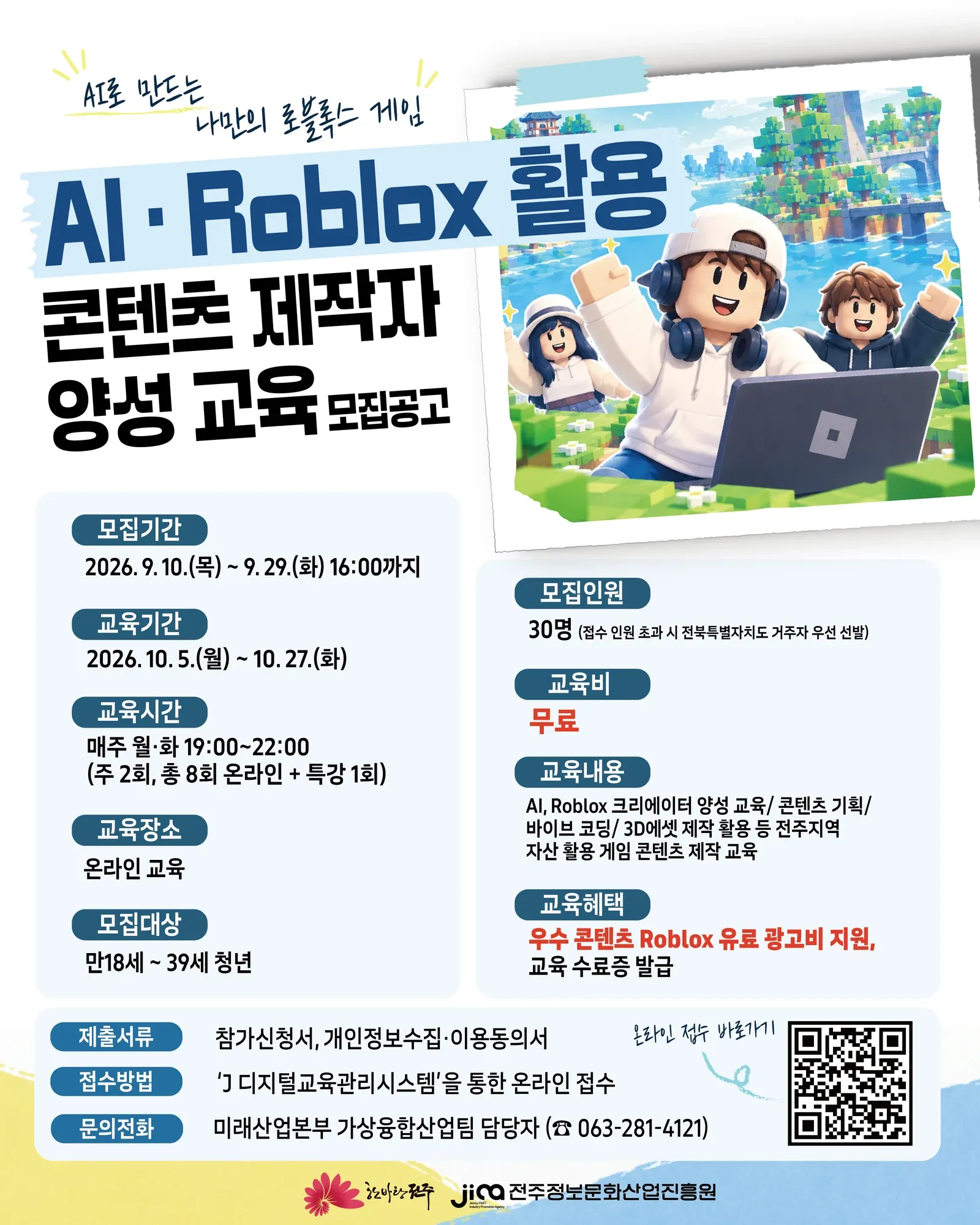
Applications are open for a free AI and Roblox content creation program for young adults aged 18–39, organized by the Jeonju IT & CT Industry Promotion Agency.
Read article ↗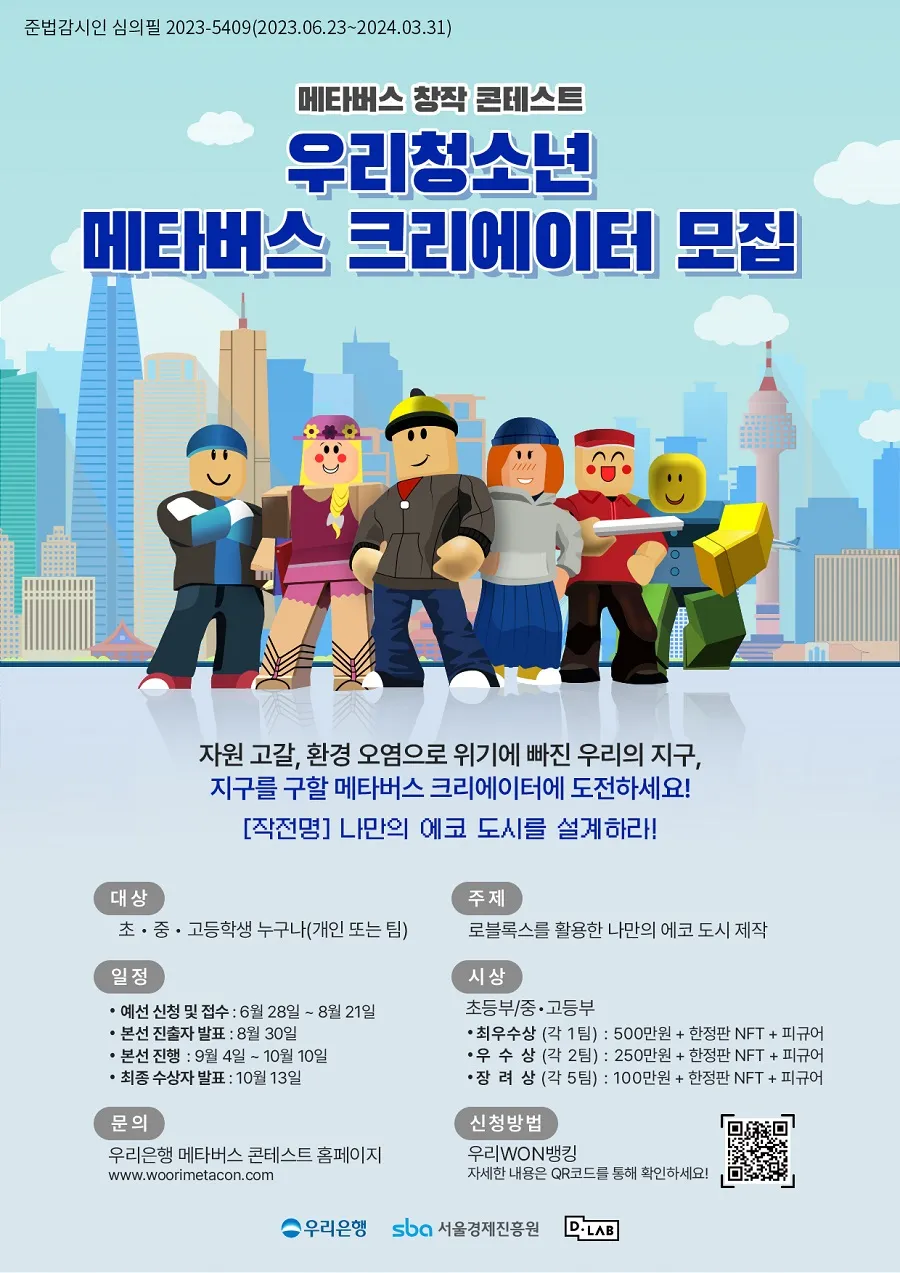
A look back at METAMATE’s mentoring and judging work for the Woori Bank Roblox game competition, commissioned by D.LAB in 2023.
Read article ↗