INSIGHTS
Before RDC 2026: What METAMATE Hoped to Discuss
A pre-conference note on the production and partnership conversations METAMATE hoped to have at RDC26 in September 2026.
Read article ↗In Roblox production, the first 3 to 10 minutes decide whether players understand the goal, act, receive rewards, and want to continue. This article explains how METAMATE defines and validates first-loop hypotheses through playtesting.
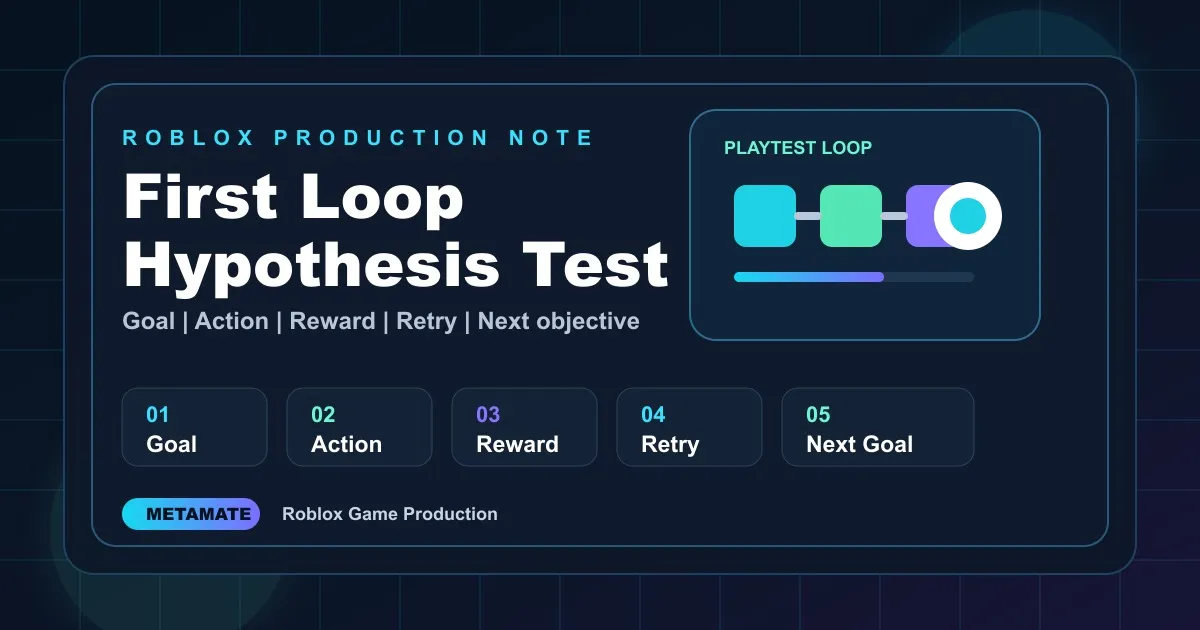
In Roblox game production, the first thing to validate is not the size of the map.
What matters first is whether a new player understands the goal, starts acting, receives a reward, and sees a reason to keep playing within the first 3 to 10 minutes.
At METAMATE, we treat the first loop as a hypothesis to validate. This applies to original games, brand IP projects, and educational Roblox worlds.
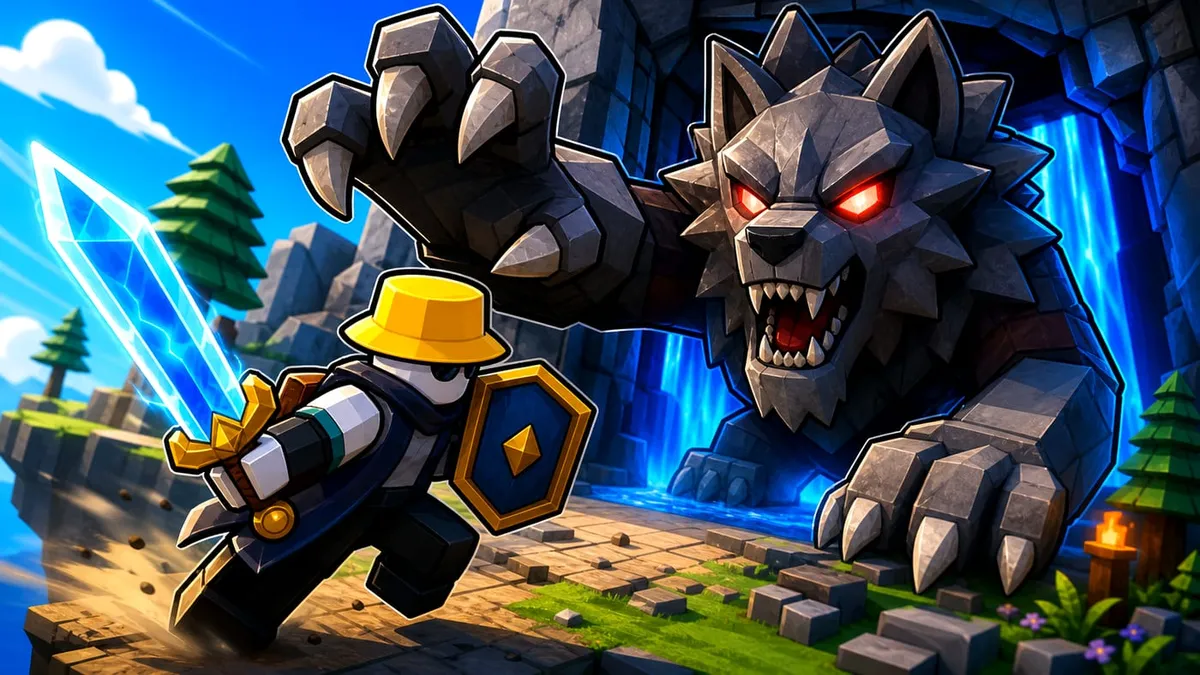
A game's first impression may begin with the logo, thumbnail, loading screen, or world mood. But inside Roblox, the more important question is whether the player starts acting quickly.
We check:
For brand games, the question is not only where the logo appears. It is how the brand becomes something the player does.
Instead of completing every system first, we break the first loop into small hypotheses.
| Hypothesis | Behavior to check |
|---|---|
| Players can find the first destination | Do they move without long explanation? |
| The first reward leads to the next action | Do they equip, upgrade, or fight after receiving it? |
| The first combat teaches interaction | Do they repeat attack, feedback, and reward? |
| The first boss works as an early goal | Do players try to reach it? |
| A visible next goal supports return intent | Do players remember what comes next? |
This turns vague feedback into concrete production decisions.
An early prototype does not need to look finished. If too many systems are added too early, it becomes difficult to understand what is actually failing.
We first check:
Behavior flow matters more than visual polish at this stage.
Player comments matter, but observed behavior matters more.
We look at:
Roblox players often do not read long instructions. It is usually better to adjust space, icons, reward timing, NPC placement, and quest order than to add more explanation.
When the first loop is weak, adding more content is often the wrong answer.
Common improvements include:
The purpose of the first loop is not to show every feature. It is to help players understand the game and want to try again.
First-loop validation also matters for brand Roblox games, IP fan experiences, and educational Roblox worlds.
We may ask:
On Roblox, exposure alone is not enough. Participation is what makes the experience memorable.
We typically check:
These are not rigid rules, but they help keep production decisions focused.
The first loop of a Roblox game is not just the first impression. It is the design of the first action, first reward, and next goal.
Before building a large world, teams should validate whether players understand the goal, act, receive feedback, and want to continue. By turning this into hypotheses, production teams can interpret playtest results more clearly.
For a related example, read our Roblox RPG Jumpstarter playtest article and our Roblox game studio selection checklist.
Share a playable link and the issues you are seeing. We can discuss a review of the first goal, controls and reward flow.
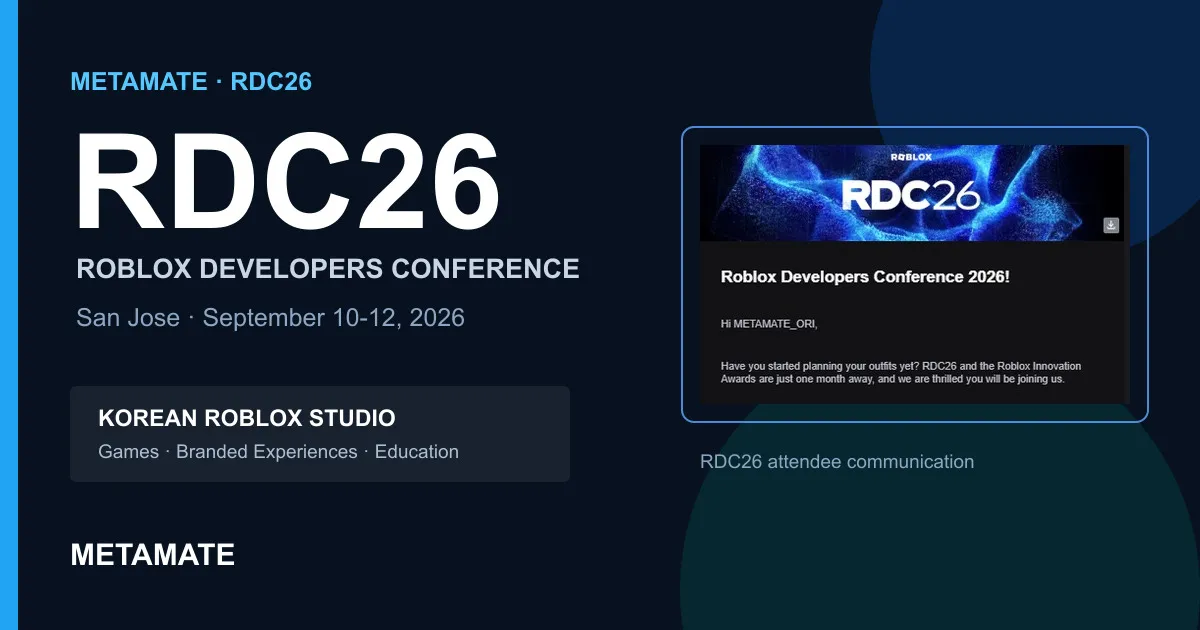
A pre-conference note on the production and partnership conversations METAMATE hoped to have at RDC26 in September 2026.
Read article ↗
METAMATE was featured in a Digital Daily interview covering our work across Roblox education, brand collaboration, and original game production.
Read article ↗