INSIGHTS
Before RDC 2026: What METAMATE Hoped to Discuss
A pre-conference note on the production and partnership conversations METAMATE hoped to have at RDC26 in September 2026.
Read article ↗When planning a Roblox game, starting with genre can make the project unstable. This article explains why teams should define the player feeling first, then design the first loop and genre around it.
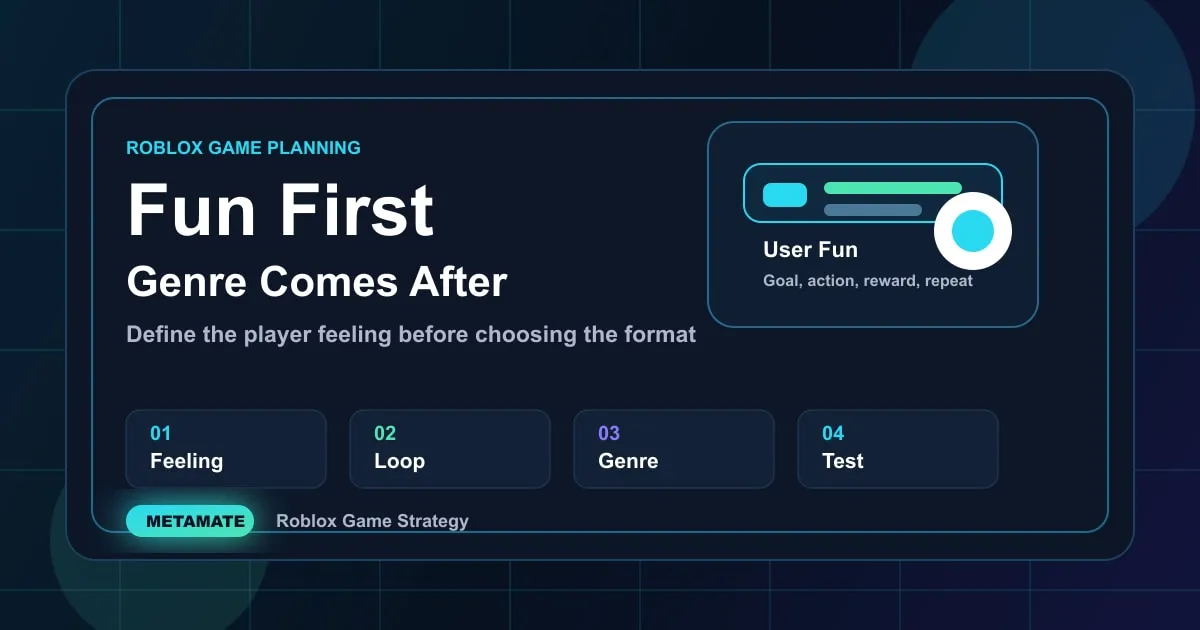
When teams start making a Roblox game, the first question is often genre.
"Should we make an obby?", "Should we make a simulator?", "Should we make an RPG?", or "Should we make a tycoon?" Genre matters, but it should not be the starting point.
Genre is a format. If the player feeling is not defined first, every later decision becomes unstable: map structure, rewards, UI, difficulty, and updates. The team will struggle to decide which features matter and which ones should be removed.
Before choosing a Roblox game genre, define what kind of fun the player should feel.
The same genre can produce completely different games.
An RPG can focus on fast growth, rare item collection, boss fights with friends, story immersion, or repeated upgrades. An obby can focus on difficult mastery, speedrunning, social competition, or reward collection.
The genre name alone does not create a production standard. "Let's make an RPG" is less useful than "players should feel clear growth within the first five minutes."
Before production starts, answer these questions.
The answer does not need to be complicated. It can be "the satisfaction of clearing a difficult section," "the anticipation of pulling a better reward," "the joy of showing a customized space to friends," or "the feeling of becoming stronger quickly."
That one sentence becomes the standard for design decisions.
Once the core fun is defined, the first loop becomes easier to design.
If collection is the core fun, the loop may be:
If competition is the core fun, the loop changes:
If growth is the core fun, the loop may be:
The core fun changes the map, reward, UI, difficulty, and tutorial.
Genre is still useful. The order is the issue.
First define the player feeling, then choose the format that best delivers it. If collection and growth are central, a simulator or RPG structure may fit. If fast retries and mastery are central, an obby or time-attack format may work better. If brand-space exploration is central, a quest-driven world may be more appropriate.
Genre is not the answer. It is the container for the fun.
Roblox players move between games quickly. If the first action is unclear, the first reward is slow, the controls feel difficult, or the next objective is invisible, players can leave immediately.
That is why Roblox production should validate whether the core fun appears within the first five minutes before expanding content volume.
Useful checks include:
Content expansion matters only after this first loop works.
Brand and IP Roblox projects need the same thinking.
If the plan stops at "build a brand space," players may simply look around and leave. The brand message should become player action.
Examples include:
Logos and spaces are useful, but they are not enough. The project should define what behavior, reward, or memory the brand creates inside the game.
METAMATE starts Roblox planning by defining the first player payoff before choosing a genre label.
From there, we connect the first loop, map structure, reward flow, UI, and playtest criteria. For brand IP games and original games, the core question is simple: why should a first-time player keep playing?
The goal is not to build every feature from the start. The goal is to define the fun clearly and test whether that fun appears in the first session.
If you are considering Roblox game production, start with these questions.
These answers make genre selection, production scope, and budget decisions clearer.
Tell us about the audience and idea. We can discuss the first goal, repeatable actions and a suitable game format.
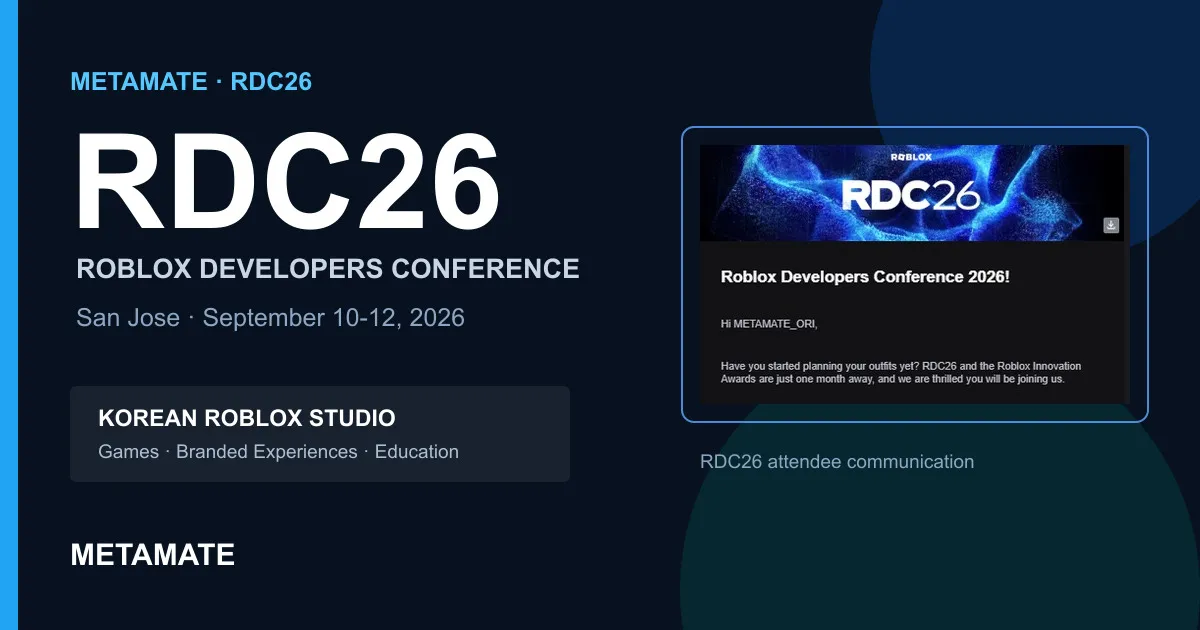
A pre-conference note on the production and partnership conversations METAMATE hoped to have at RDC26 in September 2026.
Read article ↗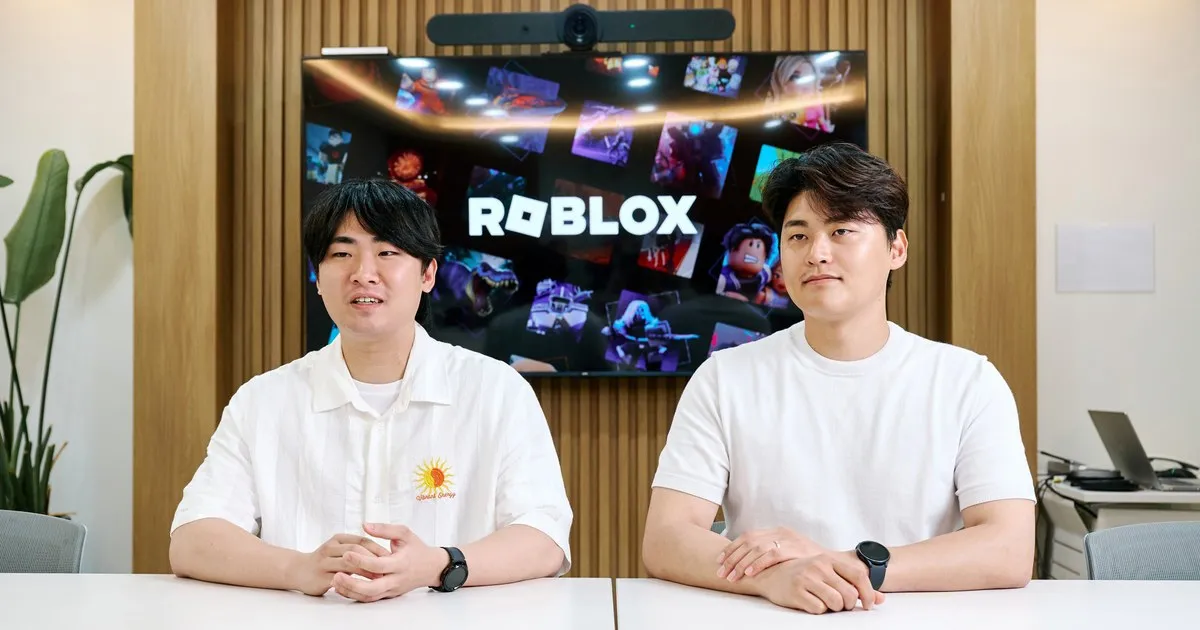
METAMATE was featured in a Digital Daily interview covering our work across Roblox education, brand collaboration, and original game production.
Read article ↗